Physical Address
304 North Cardinal St.
Dorchester Center, MA 02124
Physical Address
304 North Cardinal St.
Dorchester Center, MA 02124
Unlocking privacy in AI with Google’s Private AI Compute: hardware-secured enclaves, sealed cloud pathways, and real examples that balance speed and data protection.
Published November 11, 2025
AI is woven into daily life—from drafting emails to summarising meetings—yet one question sits at the centre of every interaction: how do we unlock the full potential of AI without sacrificing privacy? Google’s new Private AI Compute aims to answer that by routing intensive tasks to the cloud while keeping your data tightly guarded. It blends hardware-security, sealed cloud pathways, and Google’s Gemini models to deliver fast, helpful responses that protect what matters most—your personal information.
AI is getting smarter and more proactive, but many of the tasks we ask of it—live speech transcription, real-time suggestions, and multilingual summarisation—need more computing power than a phone alone can provide. Private AI Compute is Google’s way to bridge that gap. It moves complex processing to the cloud while applying strong privacy protections by design.
Jay Yagnik, Google’s VP of AI, summed it up clearly: “Private AI Compute gives quick, good answers to help you find things, offer smart hints, and do tasks while guarding your data.” The idea is simple: make on-device AI smarter and faster by offloading the heavy lifting to secured cloud infrastructure—without expanding who can see your data.
Private AI Compute is a cloud-based execution layer for Google’s Gemini models, engineered to preserve privacy while boosting performance. When an app on your device needs extra computational power, it securely sends the necessary data to Google’s cloud, processes the request inside hardware-protected environments, and returns the result. Throughout the process, Google’s protections ensure your information remains hidden from outside access—even from Google staff.
The outcome is a familiar on-device experience that now benefits from scalable compute, improved latency, and more capable models—paired with strict controls that keep your data sealed.
As AI becomes more personalised, it handles sensitive inputs such as voice recordings, messages, and context from daily routines. Unlocking privacy in AI is not just a technical goal—it’s a foundation for trust.
For background on how AI alters the security landscape, see this breakdown of the first AI‑powered cyber espionage campaign.
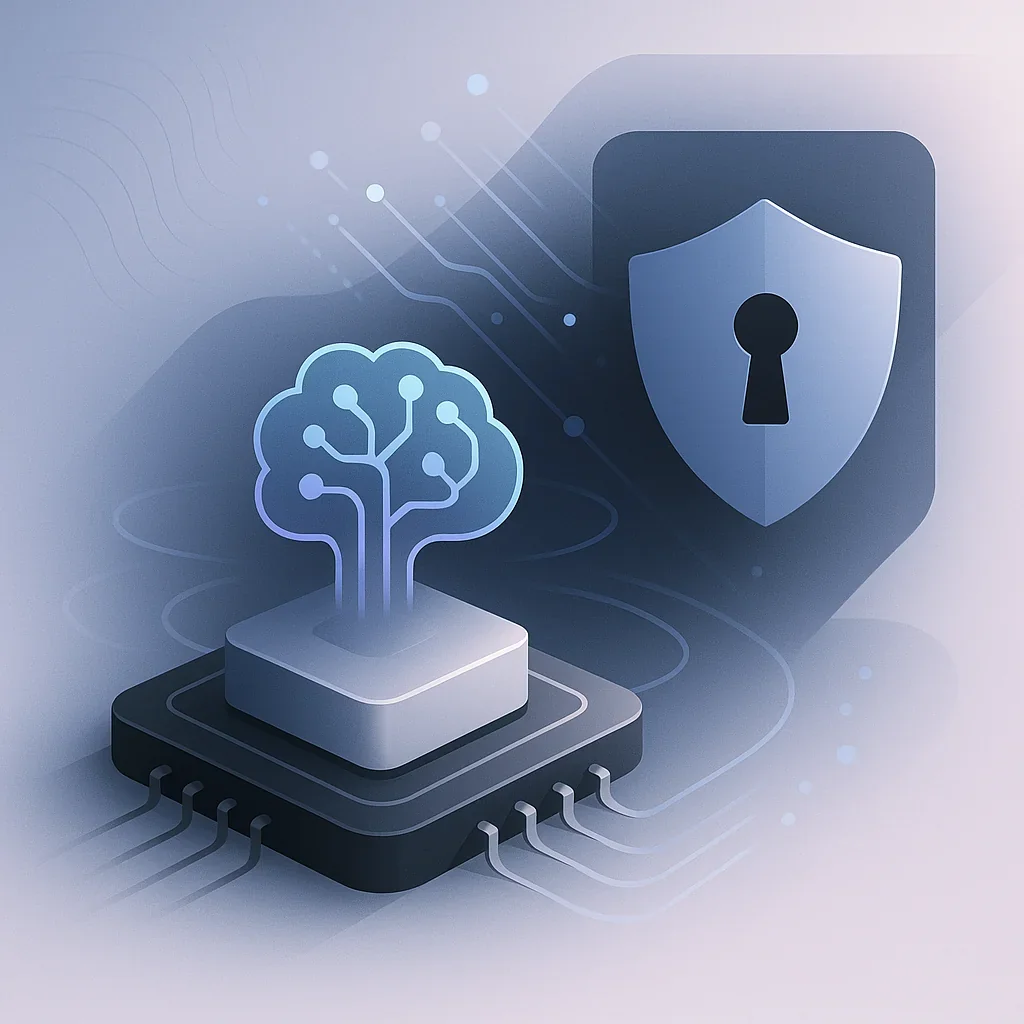
Private AI Compute rests on two pillars: hardware-protected enclaves for model processing, and a sealed cloud pathway that isolates data flow between your device and Google’s infrastructure.
Google’s chips embed strong, hardware-level controls—called Titanium Intelligence Enclaves—to protect data while Gemini models run. In practice, enclaves create isolated environments where data and code are locked down during computation. This approach limits who can access information and reduces the blast radius of potential attacks. The same method is applied across well-known Google services such as Gmail and Search.
Why this matters: hardware-backed isolation is more resistant to tampering than software alone. It helps ensure your data is processed within a boundary that’s protected even from internal operators.
Private AI Compute uses trust markers and code locks to keep data confined to a sealed pathway between your device and the cloud. The principle is that no one outside that protected chain—including Google staff—can access the data while it’s in motion or being processed. The sealed area acts as a narrow corridor that data moves through only for the specific computation it needs.
This setup is designed to establish a strong root of trust at the start and end of each processing step, from attestation to execution, and back to your device.
The data journey follows a disciplined sequence:
At each step, the focus is on isolation and verification—ensuring that what goes in and what comes out stay within the boundaries defined by Private AI Compute.
Private AI Compute is already improving everyday experiences on Pixel devices without compromising privacy:
These features showcase how a hybrid approach—on-device intelligence augmented by secure cloud execution—can make AI more helpful without expanding data exposure.
Private AI Compute prioritises low latency, scalability, and strong isolation. But every architecture comes with trade‑offs.
If your organisation is integrating AI for sensitive workflows, consider referencing broad government guidance to set baseline safeguards. The USA.gov portal aggregates consumer protection and cybersecurity resources that can help frame your internal policies.
Private AI Compute reflects a wider industry shift: powerful models are moving closer to sensitive data, and privacy measures must evolve accordingly. Beyond encryption, organisations now grapple with risks such as prompt injection, data leakage through outputs, and inadvertent retention.
Taken together, these examples illustrate that privacy isn’t a single feature but a layered approach across infrastructure, applications, and user experience.
Whether you’re a product lead, security architect, or privacy officer, you can apply pragmatic steps to align with the principles embodied by Private AI Compute.
If your team needs foundational context on security and privacy principles for consumers and agencies, review high‑level guidance via USA.gov’s official resources. While not a substitute for technical documentation, these references can help align messaging and policy with public‑facing expectations.
Private AI Compute introduces strong protections, but thoughtful scrutiny remains essential.
For perspective on the stakes, consider how fast adversaries are advancing. The emergence of AI‑powered cyber espionage underscores that keeping data compartmentalised is no longer optional—it’s table stakes.
Google says Private AI Compute aligns with its long‑standing privacy commitments and trusted rules for AI. The company plans to share more tools and technical notes over time, detailing how the architecture works and where it’s headed. The initial rollout strengthens Pixel features while setting a direction for privacy‑preserving AI experiences across Google’s ecosystem.
In practical terms, expect incremental expansions: broader language support, faster suggestions, and improved summarisation—backed by the same principle that sensitive data should remain sealed during processing.
Unlocking privacy in AI means designing systems that respect data boundaries while delivering the speed and intelligence users expect. Google’s Private AI Compute takes a clear stance: move complex tasks to the cloud, but only inside hardware‑secured enclaves and sealed pathways built to keep data hidden from everyone—even internal staff. The early examples on Pixel show what’s possible when performance and privacy are pursued together. As the industry continues to refine architectures and controls, the baseline for trustworthy AI is rising—and that’s good news for everyone.